
National Human Trafficking Hotline
Psychologically Safe Workplaces
Workforce Transformation | National Training Strategy | Stakeholder Collaboration | L&D | Evaluation
CHALLENGE
To reimagine Polaris' 192-hour hotline advocate training to improve efficiency, employee retention, and client satisfaction using a trauma-informed approach. The new training also had to comply with new Executive Orders, input from government partners (OTIP), and survey results from RTI International.
APPROACH
-
Conducted a needs assessment through town hall style feedback sessions across the organization, from advocates to the CEO
-
Redesigned 192-hour training with a focus on survivor-centered best practices, needs as articulated by hotline staff and hotline data, and trauma-informed care
-
Facilitated three iterations of training and provided data informed feedback to senior leadership based on evaluation methods I developed
-
Uncovered crucial training modalities best suited for adult learners, including hands-on experiential learning, roleplays, and debrief sessions after initial hotline shifts

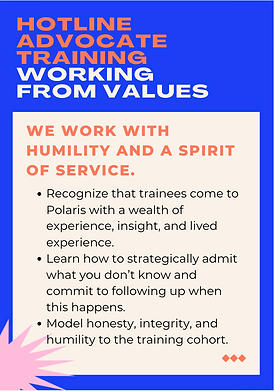
Sample excerpts from training manual designed by Jonathan Doucette, PhD
RESULTS
-
100% employee retention and pass rate, a first in the organization's history (replicated twice)
-
Increased training efficiency by 58%
-
Greater alignment between leadership and hotline staff
-
Employee surveys revealed an increase in psychological safety and increased confidence when managing secondary and vicarious trauma
REFLECTION
This project taught me the importance of cultivating psychological and emotional safety for employees at all level of an organization, particularly for organizations working on the front line of social justice issues (like human trafficking). I came on board during a particularly challenging time at Polaris. Executive orders, feedback from the Office of Trafficking in Persons, survey data from RTI International, and tensions between leadership and front line workers caused many in the organization to feel a sense of hopelessness and burn out.
This experience taught me something important: learning and development initiatives must address the psychological and emotional safety of employees, especially employees exposed to secondary and vicarious trauma. I needed to ensure employees left training with the tools to create safety for themselves and others, even in my absence. I began this process by holding "check-in" sessions for new employees after hotline shifts. These spaces helped employees focus on what was within their control, empowered employees to express and manage secondary and vicarious trauma, and mended relationships between senior leadership and front line workers. Training efficiency improved by 58% and employee retention/pass rate stayed at 100% because training addressed psychological and emotional safety. For those on the front lines of social justice work, this insight cannot be overstated: psychological safety is not separate from organizational effectiveness. When people feel safe, supported, and connected to one another, retention and learning become possible.